



In the world of modern recovery and performance wellness, few protocols have gained as much attention—or delivered as much consistent physiological impact—as contrast therapy. At its core, contrast therapy is simple: alternating between intense heat and cold exposure.
For sauna users, this usually means pairing a traditional sauna session with a cold shower or cold plunge. But beneath the simplicity lies a surprisingly sophisticated biological process that supports recovery, circulation, stress resilience, and overall vitality.
What Is Contrast Therapy?
Contrast therapy is the deliberate alternation between:
- Heat exposure (typically a sauna session)
- Cold exposure (cold shower, plunge pool, or cold immersion)
The goal is not comfort—it is controlled physiological stress cycling.
A typical contrast session might look like:
- 10–15 minutes in a sauna
- 30 seconds to 2 minutes of cold exposure
- Repeat 2–4 cycles depending on tolerance
This alternating pattern creates rapid shifts in vascular function, nervous system activity, and metabolic response.
Why It Works: The Science of Thermal Pumping
The key mechanism behind contrast therapy is vasodilation and vasoconstriction cycling.
In the sauna (heat phase):
- Blood vessels expand (vasodilation)
- Heart rate increases
- Blood flow improves to muscles and skin
- Toxins and metabolic byproducts are mobilized
Vasodilation (heat)→↑blood flow→↑tissue perfusion
In the cold shower (cold phase):
- Blood vessels constrict (vasoconstriction)
- Blood is redirected toward core organs
- Inflammation signaling may be reduced
- Nervous system becomes alert and activated
Vasoconstriction (cold)→↓ peripheral flow→ Vasoconstriction
This repeated expansion and contraction acts like a vascular pump, supporting circulation efficiency and recovery dynamics.
The Nervous System Reset Effect
Beyond circulation, contrast therapy strongly influences the autonomic nervous system.
- Heat exposure activates relaxation and parasympathetic recovery pathways
- Cold exposure activates alertness and sympathetic response
When alternated intentionally, the body learns to shift between these states more efficiently.
Over time, users often report:
- Faster recovery after exercise
- Improved stress tolerance
- Greater mental clarity
- Reduced perception of fatigue
This is not just “feeling refreshed”—it is improved autonomic flexibility.
Why Pair Sauna with Cold Exposure?
Saunas alone already offer powerful benefits: relaxation, improved circulation, and stress reduction. Cold exposure alone stimulates alertness and resilience.
Together, they create something more dynamic:
Enhanced Circulatory Training
The repeated thermal expansion and contraction of blood vessels may improve vascular responsiveness over time.
Accelerated Recovery Sensation
Many users report a “lightness” or immediate post-session recovery effect, especially after physical exertion.
Stronger Endorphin Response
The contrast between heat stress and cold shock amplifies neurochemical release associated with well-being and mood elevation.
Improved Thermal Adaptation
Regular exposure may help the body become more efficient at regulating internal temperature under stress conditions.
The Ideal Contrast Therapy Sequence
While there is flexibility, a foundational protocol looks like this:
Step 1: Sauna (Heat Phase)
- Duration: 10–15 minutes
- Temperature: Moderate to high sauna range
- Goal: Deep warming, sweating, relaxation
Step 2: Cold Exposure
- Duration: 30 seconds to 2 minutes
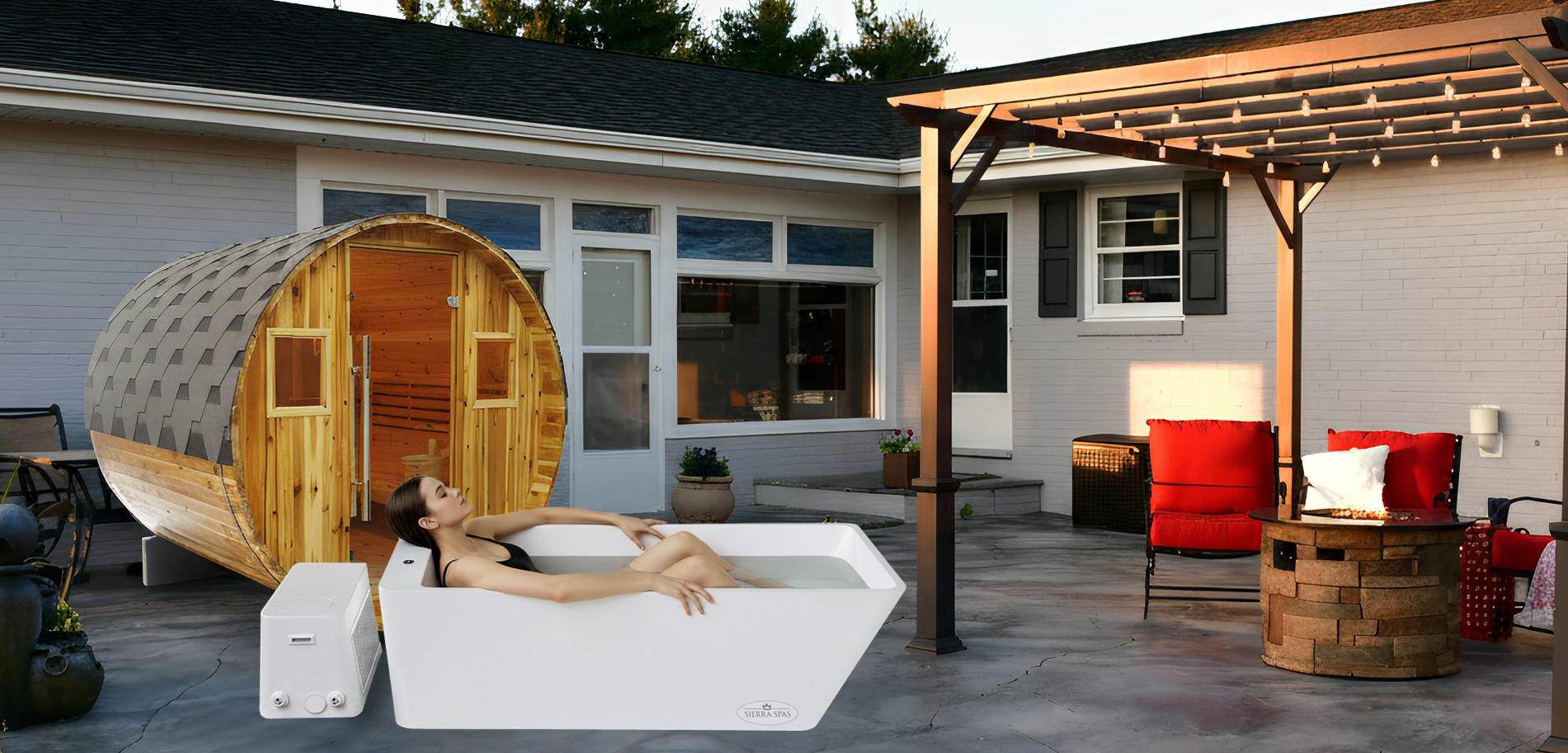
- Method: Cold shower or plunge
- Goal: Rapid cooling and alertness
Step 3: Rest or Transition
- 2–5 minutes of seated rest
- Allow heart rate and breathing to stabilize
Step 4: Repeat Cycles
- 2–4 total rounds depending on experience level
Cold Shower vs. Cold Plunge: What’s the Difference? Both methods are effective, but they offer slightly different experiences:
Cold Shower
- More accessible and beginner-friendly
- Easier to control intensity
- Ideal for daily use or home saunas
Cold Plunge
- Deeper and more immersive cold exposure
- Stronger cardiovascular and nervous system response
- Often used in spa or athletic environments
For most users, starting with cold showers is sufficient—and often preferred.
Who Benefits Most from Contrast Therapy?
Contrast therapy is widely used across wellness, fitness, and recovery settings. It is especially beneficial for:
- Athletes and active individuals
- People with physically demanding jobs
- Individuals seeking stress regulation tools
- Sauna users looking to enhance results
- Wellness enthusiasts building recovery routines
It is also increasingly used in spa and luxury wellness environments as a signature “performance recovery” offering.
Safety and Best Practices While contrast therapy is generally well tolerated, it should be approached with intention:- Avoid extreme temperatures when starting out
- Limit cold exposure if you are new to the practice
- Hydrate before and after sessions
- Listen to cardiovascular signals (dizziness, discomfort, etc.)
- Consult a professional if you have heart or circulatory conditions
Consistency matters more than intensity.
Why Contrast Therapy Fits Modern Sauna Design
A sauna is no longer just a heat room—it is the first half of a complete thermal system. When paired with cold exposure, it becomes:
- A recovery station
- A stress adaptation tool
- A circulation training environment
- A daily performance ritual
This integration is why modern wellness facilities increasingly design sauna and cold elements as a unified system rather than separate amenities.
Final Thoughts Contrast therapy is powerful not because it is complex, but because it is fundamentally aligned with how the human body responds to stress and recovery. By alternating between heat and cold, you are not just relaxing—you are training your body to:- Recover faster
- Circulate more efficiently
- Adapt more effectively to stress
- Reset more quickly between exertion and rest